You notice it almost as soon as you leave the airport[1] – Zakynthos is not an island where you want to spend your holiday waiting on someone else’s timetable. This driving in Zakynthos guide is for travellers who want simple, reliable freedom: beach in the morning, taverna in the hills by lunch, sunset views later on, without the usual transport hassle.
The good news is that driving here is usually straightforward. The roads are manageable, distances are short, and most popular areas are easy to reach with the right vehicle. The part that catches visit[2]ors out is not speed or heavy traffic. It is the combination of narrow village lanes, sharp bends, uneven surfaces, summer heat, and parking in busy spots at the wrong time of day.
Driving in Zakynthos guide: what to expect on the road
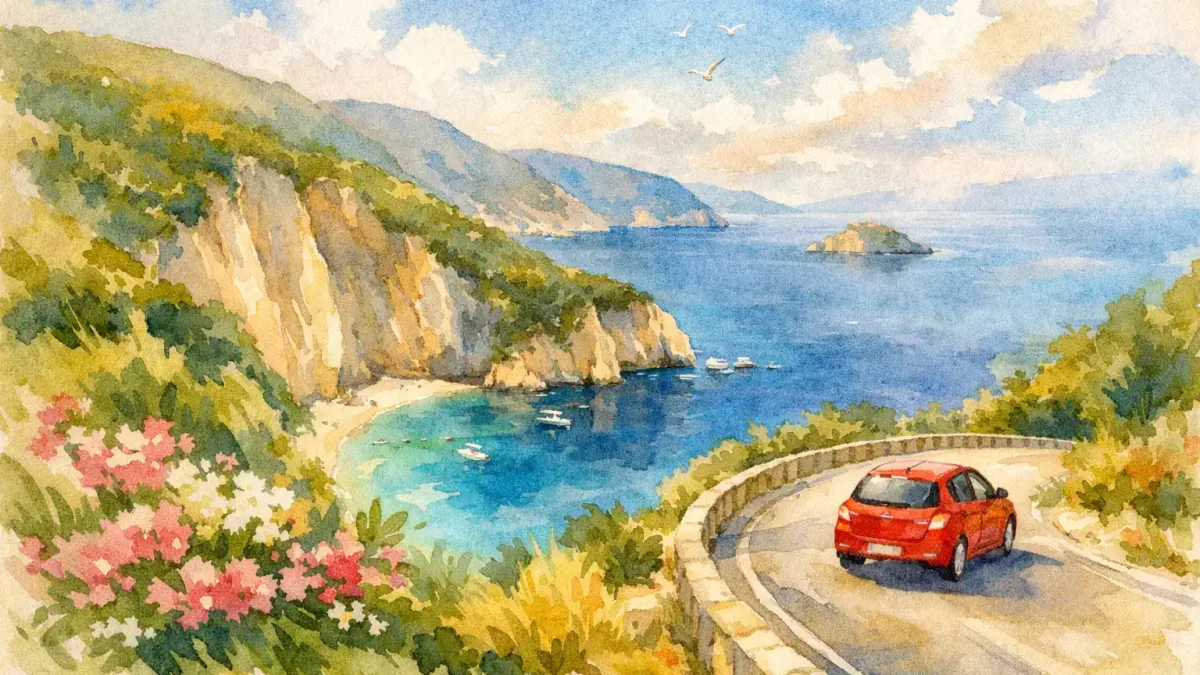
Zakynthos is small enough to feel relaxed, but that does not mean every road is easy. Around main tourist areas such as Zakynthos Town, Laganas, Tsilivi, Argassi and Alykes, roads are generally simple to follow. Once you head inland or towards quieter beaches, roads can narrow quickly and become more winding.
In practice, that means your journey might look short on a map but still take longer than expected. A 25-kilometre trip is not a motorway run. You may pass scooters, parked cars, sudden bends, or a goat that has decided the road belongs to it. Local drivers are used to this rhythm. Visitors do best when they keep things calm and avoid rushing.
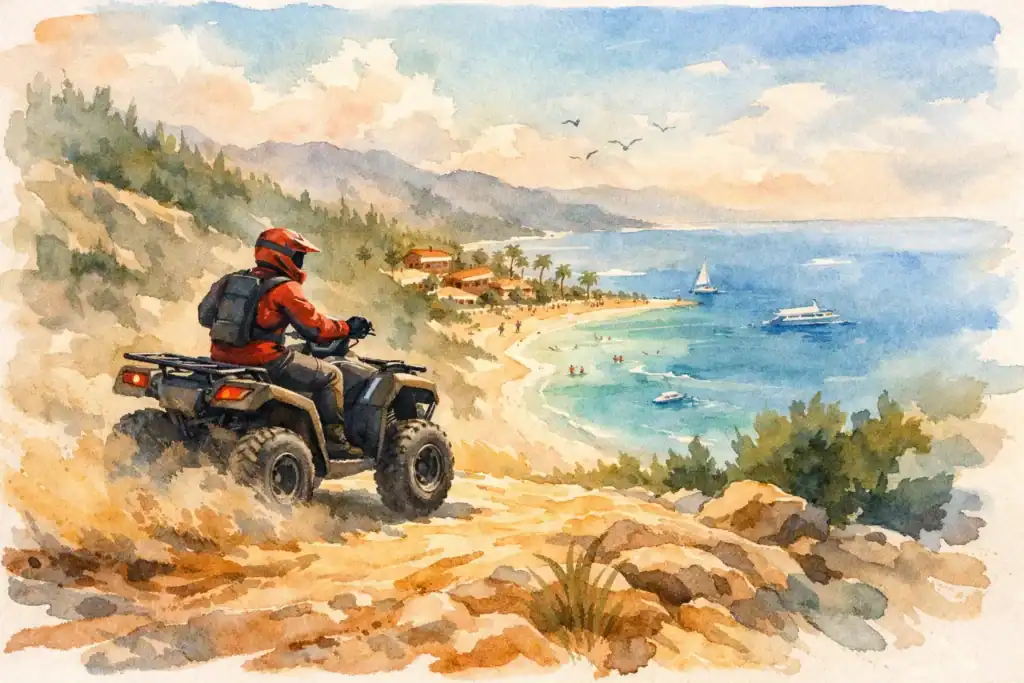
Road quality varies. Some routes are smooth and easy, while others have potholes, broken edges, loose gravel or steep inclines. If you are planning to explore beyond the main resorts, a small car is usually ideal for couples and light travel, while an ATV can suit people who want a more open-air island experience. A scooter can be a great choice for shorter journeys and coastal hopping, but it is less forgiving if road surfaces are rough or if you are carrying beach bags, shopping and two people in full holiday mode.
The basic rules visitors should know
People often worry about whether driving in Greece feels very different from home. The essentials are simple. You drive on the right-hand side of the road, seatbelts are expected, and you should always carry your driving documents and rental paperwork. Speed limits can vary, so pay attention to signs rather than assuming.
That said, the real rule in Zakynthos is defensive driving. Do not assume everyone will indicate early. Do not assume a parked vehicle will stay parked. Do not assume a road that looks wide enough for two cars actually is. Leave space, take bends gently, and use your horn lightly if you are approaching a very tight blind corner on a village road.
If you are used to driving in large cities, Zakynthos may feel easier. If you are used only to wide roads and very clear lane markings, it may feel less structured. Neither is a problem if you stay alert and patient.
Roundabouts, junctions and village lanes
Many of the trickier moments happen at small junctions and in villages rather than on open roads. Streets can tighten suddenly, especially near churches, squares, and older stone houses. Sometimes two drivers meet and one simply has to reverse a little to let the other through. That is normal.
Roundabouts and larger junctions near busier areas deserve extra attention in peak season. Traffic can build up around airport runs, town errands and evening dinner times. If you arrive expecting fast-flowing traffic all day, you will be disappointed. If you expect a slower island pace and allow time, it feels much easier.
Parking without stress
Parking is usually available, but not always right where you want it. In Zakynthos Town and the most popular beach areas, spaces fill quickly in summer. The easiest way to avoid frustration is to arrive earlier for busy places and accept a short walk instead of circling endlessly for the perfect spot.
In villages, park carefully and never block access roads, gates or tight turning areas. A space that looks harmless may be essential for a resident, delivery van or farm vehicle. On narrow roads, badly parked cars create real problems very quickly.
At beaches and scenic spots, look at the ground before leaving your vehicle. Dusty or uneven surfaces can be fine in dry conditions but awkward later, especially for scooters and some smaller vehicles. If a parking area looks steep, rocky or crowded, take an extra minute before committing.
Which vehicle makes the most sense?
This depends on your holiday more than your budget. If you want comfort, air conditioning, shopping space and easy family travel, a car is the safest all-round choice. It is especially useful for airport arrivals, hotel changes, inland villages and longer day trips.
If your plan is mostly sunshine, short distances and a bit of fun between resort areas, a scooter can be a great fit for confident riders. It is easier to park and works well for solo travellers or couples travelling light. The trade-off is exposure to heat, wind, road dust and less stability on rougher sections.
ATVs appeal to travellers who want something more adventurous and practical for mixed road conditions. They give you a better view, handle uneven patches well, and suit people who like a more open ride. The trade-off is that they are slower and less comfortable for longer paved-road journeys than a car.
There is no perfect option for everyone. The right choice is the one that suits your route, your confidence level and how much comfort you want during the hottest part of the day.
Fuel, navigation and mobile signal
Fuel stations are easy enough to find in the more active parts of the island, but do not leave it until the warning light comes on if you are heading out for a full day. Remote stretches are part of the fun in Zakynthos, but they are less fun when you are watching the fuel gauge.
Navigation apps work well in most cases, though they are not always perfect in small inland roads. Sometimes the fastest route on your phone is not the easiest route in real life. If a turn looks too narrow, too steep or clearly unsuitable, trust your eyes. A one-minute check now is better than trying to reverse down a lane lined with stone walls five minutes later.
Signal is generally fine in most visitor areas, but not every scenic corner is equally strong. Screenshot key directions if you are heading to a quieter part of the island.
Common mistakes first-time visitors make
The biggest mistake is overplanning the day. On Zakynthos, five stops often turn into three once you add swimming, lunch, photos, parking and slower roads. Keep your itinerary light enough to enjoy the island rather than chasing it.
The second mistake is choosing a vehicle based only on price. Cheap feels good at booking stage, but it matters less if the vehicle does not suit your route or luggage. If you are arriving with suitcases, beach gear or children, convenience matters.
The third is driving to a timetable that belongs on the mainland. Zakynthos rewards flexibility. If one beach is packed, go to another. If a village road feels tight, slow down and let the island set the pace.
A few smart habits that make everything easier
Start earlier on your biggest outing days, especially in July and August. The roads are calmer, parking is simpler, and midday heat is less tiring. Keep water in the vehicle, use sunglasses, and do not underestimate how tiring bright sun can be when you are concentrating on unfamiliar roads.
For beach days, shake off sand before getting back in. It sounds obvious, but it keeps the vehicle cleaner and makes the rest of the week more comfortable. For evening drives, remember that some roads are much darker than visitors expect once you leave resort centres, so take it slower than you would in daylight.
If you are booking with a local company such as Zaimi Rentals, one of the biggest advantages is simple, practical advice about what vehicle suits your stay. That kind of local support can save you from booking something that looks fine online but feels wrong on the island.
When driving is the best choice – and when it is not
Driving is the best option if you want freedom, multiple stops in one day, airport convenience and access to quieter parts of the island. It makes a real difference for families, couples staying outside the busiest resorts, and travellers who do not want to depend on taxis every time they leave the hotel.
It may not be the best fit if you dislike narrow roads, want to drink freely at long lunches, or plan to stay almost entirely within walking distance of your resort. Some holidays genuinely do not need a vehicle every day. But for most visitors who want to see the island properly, having your own transport changes the whole trip.
Zakynthos is at its best when you can follow your own plan, stop when a view catches your eye, and change course without turning the day into a logistics exercise. Drive gently, leave room for the unexpected, and the island becomes very easy to enjoy.